



Introduction: The Sound of the Future
If you have listened to a top-tier YouTube documentary, an engaging podcast advertisement, or an interactive corporate onboarding module recently and caught yourself wondering, “Is that a real person or an AI?”—you have experienced the profound transformation happening in modern audio technology.
We have officially closed the chapter on the era of rigid, robotic, monotone computer voices that once sounded like early GPS navigators. Today’s artificial intelligence text-to-speech (TTS) and voice cloning platforms are capable of replicating human breathing patterns, emotional cadence, micro-pauses, hesitations and diverse regional accents with astonishing, breath-taking accuracy.
For content creators, digital marketers, educators, podcasters, game developers, and multinational enterprises, this evolution is more than just a passing tech trend. It represents a fundamental paradigm shift in how audio content is produced, scaled, personalized and localized across the globe.
In this comprehensive, in-depth masterclass guide, we will unpack the core technology driving this shift, examine the current landscape of AI voice models, break down real-world industry applications, address ethical considerations and provide a strategic roadmap for integrating advanced tools like Speakatoo into your daily workflow.
The Technological Evolution — How AI Voices Learned to Breathe
To truly appreciate why modern AI voices sound so remarkably human, it helps to examine the architectural evolution of speech synthesis over the past decade.
From Legacy Cascaded Pipelines to Native Speech-to-Speech (S2S)
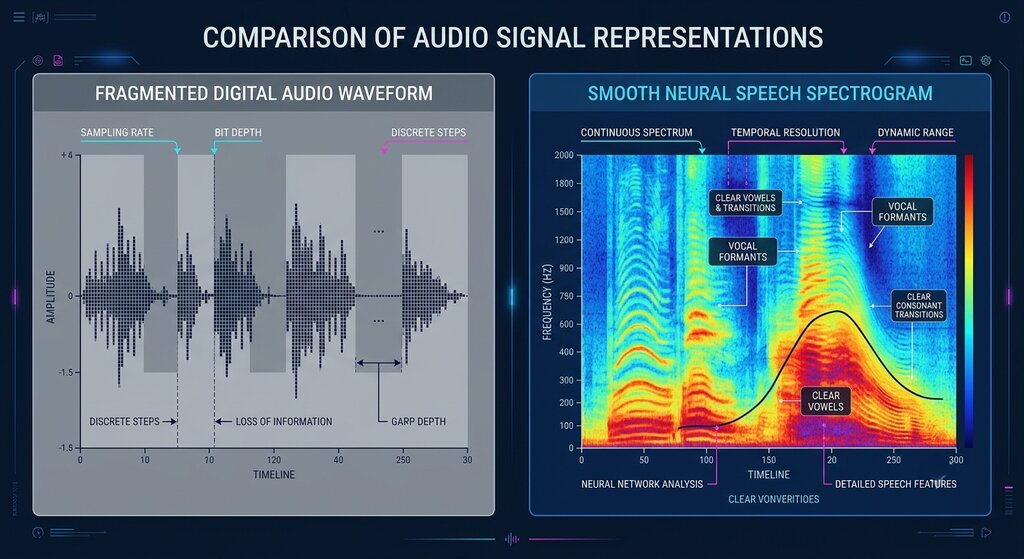
For years, text-to-speech systems relied on cascaded pipelines. These traditional systems broke down a text input into phonemes (the smallest units of sound), ran separate algorithms to guess pitch and rhythm, and then stitched prerecorded audio snippets or synthesized formant waves together.
The Flaw: This fragmented approach stripped away natural context. The system did not know whether a sentence was sarcastic, joyful, or melancholic. As a result, outputs suffered from robotic inflection, unnatural pacing, and flat intonation.
The Generative Neural Revolution
The arrival of deep learning changed everything. Modern text-to-speech engines leverage advanced neural architectures—such as transformer-based models and diffusion models—that treat audio generation much like language generation.
Contextual Awareness: Today’s generation models process audio tokens natively alongside large language models. They understand the intent and subtext behind a sentence. If a script reads, “I honestly can’t believe we pulled that off!”, the AI doesn’t just read the words literally; it interprets the underlying excitement, adjusts its dynamic energy, and scales its pitch naturally.
Acoustic Micro-Cues: Modern neural vocoders can synthesize subtle breathing sounds, mouth clicks, vocal fry, and natural pauses. These micro-cues are what trick the human brain into perceiving the voice as authentic rather than artificial.
Core Trends Dominating the AI Voice Space
The artificial intelligence voice ecosystem is moving at a blistering pace. Several major technical and functional trends are currently defining how creators, developers, and businesses build audio strategies:
Zero-Shot Micro-Cloning and Instant Replication
Cloning a voice used to require hours of specialized studio recording, expensive hardware, and weeks of model fine-tuning. Today’s micro-cloning technology allows users to generate a high-fidelity digital voice clone using as little as 10 to 15 seconds of clean audio.
The Impact: Podcasters, educators, and personal brands can scale their audio presence effortlessly. Instead of spending days in a sound booth recording retakes or fixing mispronounced words, creators can type out a script and have their cloned voice narrate it instantly with exact fidelity.
Granular Emotion Tagging and Dynamic Delivery
A voice isn’t just about sounding clear—it’s about conveying emotion. Modern TTS platforms feature advanced emotion controls. Creators can dynamically shift tone profiles—whether they need a soft, empathetic whisper for a guided meditation app, an urgent, high-energy tone for an advertising spot, or a calm, authoritative cadence for e-learning modules.
Hyper-Localization and Seamless Code-Switching
Global reach is no longer restricted by language barriers or expensive dubbing studios. Advanced multilingual TTS engines support upwards of 130+ languages and regional dialects. More importantly, they excel at code-switching—the natural blending of two languages mid-sentence (such as multilingual speakers fluidly switching between English and regional languages)—without dropping quality or mispronouncing local terms.
Industry-by-Industry Breakdown: How Sectors Are Leveraging AI TTS

The versatility of modern text-to-speech and voice cloning has led to widespread adoption across multiple sectors, fundamentally transforming traditional business workflows:
1. Content Creation, YouTube and “Faceless” Channels
The creator economy thrives on consistency. Producing high-converting video essays, educational tutorials, and entertainment shorts requires relentless scriptwriting, recording, and editing.
Scaling Production: Creators are leveraging realistic AI voiceovers to scale production, manage multiple niche channels simultaneously, and test out video scripts rapidly without investing in costly studio setups or spending hours behind a microphone.
Consistency: Even when a creator is traveling or resting, their automated or semi-automated channels continue to churn out polished content with consistent vocal branding.
2. Corporate Training, HR and E-Learning
HR departments and educational institutions face a constant challenge: turning lengthy, dense compliance manuals, safety regulations, and training PDFs into engaging, digestible content.
Engagement Boost: Reading text-heavy documents often leads to low employee retention. By converting these manuals into professional audio modules using natural-sounding AI voices, companies can create engaging podcasts or course narrations that employees can listen to on the go during commutes or breaks.
3. Customer Support, IVR and Conversational Agents
Automated phone lines (Interactive Voice Response systems) have historically been a source of immense customer frustration due to choppy, robotic phone trees and rigid prompts.
Human-Centric IVR: Modern empathetic voice AI ensures customers are greeted by warm, natural-sounding automated agents that can handle inquiries smoothly, reduce call drop-offs, and elevate brand perception from the very first second of contact.
4. Gaming, Animation and Indie Development
Independent game developers and animation studios often operate on tight budgets, making it impossible to hire professional voice actor casts for dozens of NPC (Non-Player Character) dialogue lines.
Cost-Effective Prototyping & Production: AI voice generation allows indie studios to prototype dialogue seamlessly, test narrative pacing, and in many cases, produce release-ready character voices with distinct emotional ranges and accents.
Deep Dive into Voice Cloning Ethics, Security, and Consent
While the technological benefits are immense, the widespread democratization of AI voice cloning brings critical responsibilities. Ethical usage, security guardrails, and quality control are paramount for the sustainable growth of the audio industry.
1. Consent, Verification and Digital Watermarking
Uncontrolled voice cloning opens the door to malicious deepfakes, financial scams, and unauthorized impersonations. Responsible AI platforms enforce strict security protocols:
Explicit Audio Verification: Legitimate systems require users to complete verification steps—such as reading a specific randomized challenge phrase—to prove they own or have explicit legal consent to clone a target voice.
Audio Provenance & Watermarking: Leading platforms embed silent cryptographic watermarks into generated audio files, enabling algorithms and platforms to detect AI-generated speech and prevent malicious misuse.
2. The Importance of Human-in-the-Loop Quality Control
While artificial intelligence can handle 90% of the heavy lifting, human review remains a critical step in professional publishing.
Catching Nuances: AI models can occasionally mispronounce rare acronyms, proprietary brand names, or regional slang terms. A quick human listen ensures absolute perfection before publication.
Pacing and Dramatic Pause Fine-Tuning: Adding intentional breathing pauses or tweaking emphasis ensures that emotional arcs hit with maximum impact.
How to Choose the Right AI Voice Platform for Your Workflow
With hundreds of text-to-speech tools flooding the digital market, choosing the right platform can feel overwhelming. Whether you are an independent creator or an enterprise product manager, evaluate platforms based on these four foundational pillars:
Voice Library & Demographic Diversity: Look for platforms that offer an extensive library of natural-sounding voices spanning multiple age groups, genders, professional tones, and regional accents.
Granular Audio Customization: The ability to tweak pitch, speed, emphasis, and insert intentional breathing pauses makes the difference between “good” text-to-speech and studio-grade narration.
Localization and Language Support: Ensure the platform supports robust multi-language translation and accurate pronunciation across global markets.
Intuitive User Interface & Integration Speed: A clean, user-friendly dashboard where you can simply paste your script, select your preferred voice, preview, and download saves countless hours of production overhead.
If you want to experience studio-grade audio generation firsthand, platforms like Speakatoo provide an extensive ecosystem of natural AI voices and advanced text-to-speech features designed to streamline content creation for creators and enterprises alike. You can easily test out their tools directly through the Speakatoo Text-to-Speech Generator.
How to Choose the Right AI Voice Platform for Your Workflow

With hundreds of text-to-speech tools flooding the digital market, choosing the right platform can feel overwhelming. Whether you are an independent creator or an enterprise product manager, evaluate platforms based on these four foundational pillars:
Voice Library & Demographic Diversity: Look for platforms that offer an extensive library of natural-sounding voices spanning multiple age groups, genders, professional tones, and regional accents.
Granular Audio Customization: The ability to tweak pitch, speed, emphasis, and insert intentional breathing pauses makes the difference between “good” text-to-speech and studio-grade narration.
Localization and Language Support: Ensure the platform supports robust multi-language translation and accurate pronunciation across global markets.
Intuitive User Interface & Integration Speed: A clean, user-friendly dashboard where you can simply paste your script, select your preferred voice, preview, and download saves countless hours of production overhead.
If you want to experience studio-grade audio generation firsthand, platforms like Speakatoo provide an extensive ecosystem of natural AI voices and advanced text-to-speech features designed to streamline content creation for creators and enterprises alike. You can easily test out their tools directly through the Speakatoo Text-to-Speech Generator.
Step-by-Step Guide: Integrating AI Voice Generation into Your Content Pipeline
Transitioning your content production pipeline to include AI voice generation requires a structured approach. Follow this proven framework to maximize efficiency and audio quality:
Step 1: Script Optimization for AI Readability
Before feeding your script into an AI generator, optimize it for spoken delivery:
Write conversationally: Use shorter sentences and active voice.
Punctuate intentionally: Use commas, periods, and em-dashes to signal natural pauses to the AI engine.
Spell out tricky numbers and acronyms: Instead of writing
$4M, write outfour million dollarsto ensure correct pronunciation.
Step 2: Voice Selection and Tone Matching
Match the voice profile to your content genre. For instance, a warm, resonant voice works best for storytelling and podcast narration, while an energetic, crisp tone is ideal for marketing advertisements and social media reels.
Step 3: Generation, Preview, and Iteration
Generate a sample paragraph first. Listen closely for pacing, emotional resonance, and word emphasis. Adjust speed sliders or punctuation if necessary before rendering the final full-length audio file.
Step 4: Post-Processing and Assembly
Import your generated audio track into your favorite video or audio editor (such as Premiere Pro, DaVinci Resolve, or Audacity). Layer background music, sound effects, and visual elements to produce a polished final masterpiece.
Conclusion: The Audio Revolution is Here to Stay
The barrier to entry for creating broadcast-quality audio has completely vanished. What used to require thousands of dollars in specialized studio equipment, professional voice actor booking fees, and days of post-production editing can now be accomplished in a matter of minutes.
Whether you are a solo content creator looking to scale your video output, an educator transforming textbooks into immersive audio courses, or an enterprise expanding into dozens of international markets, embracing emotion-driven text-to-speech and AI voice cloning is no longer optional—it is essential for staying competitive in a fast-paced digital world.
Ready to transform your written scripts into stunning, human-quality audio? Head over to Speakatoo to explore thousands of AI voices, test out advanced localization features, and elevate your content strategy today.